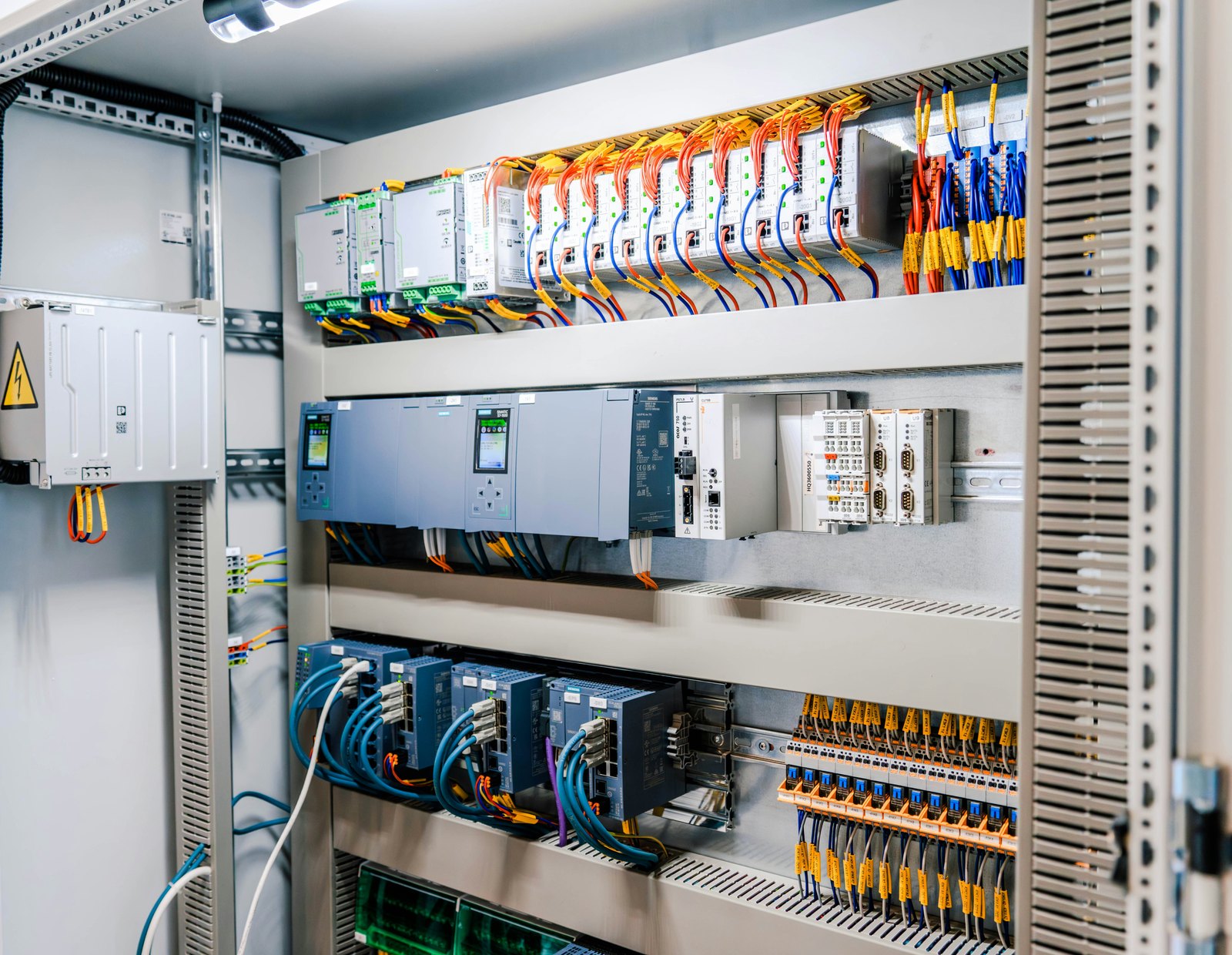
Automation and control rooms, PLC and DCS spaces, instrumentation areas, and machine or process equipment enclosures require project-specific evaluation of the fire hazard, equipment, enclosure conditions, occupancy, process shutdown sequence, ventilation, piping constraints, and approval requirements.
An industrial control room or process-equipment designation does not determine the final suppression system. Selection depends on the specific fire hazard, combustible materials, equipment arrangement, process conditions, enclosure characteristics, occupancy, operating sequence, storage-space limitations, piping routes, applicable standards, system configuration, approval status, and Authority Having Jurisdiction requirements.
These examples are illustrative. The final protection approach depends on the specific hazard, equipment, enclosure, occupancy, operating requirements, system configuration, and project approvals.
Fire protection for process and machine equipment must be coordinated with the process, equipment interlocks, fuel and energy isolation, shutdown requirements, owner procedures, and applicable fire-protection requirements.
The suppression system does not replace process safety systems, equipment guarding, electrical protection, fault detection, equipment maintenance, or other required safeguards.
Total-flooding protection depends on the ability of the protected room or enclosure to establish and maintain the required agent concentration for the applicable design period. Openings, conveyor or product penetrations, exhaust and ventilation systems, doors, access panels, pressure effects, and leakage paths must be evaluated as part of the project design.
HVAC and exhaust shutdown, damper operation, door and access-panel position, pressure-relief venting, equipment shutdowns, and post-discharge ventilation must be coordinated with the system operating sequence and applicable requirements.
Suppression-system design should be coordinated with the owner’s production, shutdown, restart, recovery, ventilation, inspection, maintenance, and post-discharge response requirements.
FK-5-1-12 leaves no agent residue after discharge, reducing cleanup associated with the suppression agent.
FK-5-1-12 is an engineered total-flooding clean-agent system that may be considered for industrial control and process-equipment spaces where electrically non-conductive protection, no suppression-agent residue, available storage space, enclosure conditions, the fuels present, design criteria, operating requirements, and configuration-specific approval requirements support its use.
FK-5-1-12 suppresses fire primarily through chemical interference with the combustion process, combined with heat absorption.
Final suitability requires project-specific review using the current controlled system documentation.
Approval and certification status varies by system configuration, including container size, working pressure, component, arrangement, and jurisdiction. Approval of one configuration does not automatically extend to another.